Modifications
Change the sound of a cymbal you already own
Re-hammering, re-lathing, weight reduction, diameter changes, rivets, holes and more. Every job starts with a conversation about the cymbal and what you want from it.
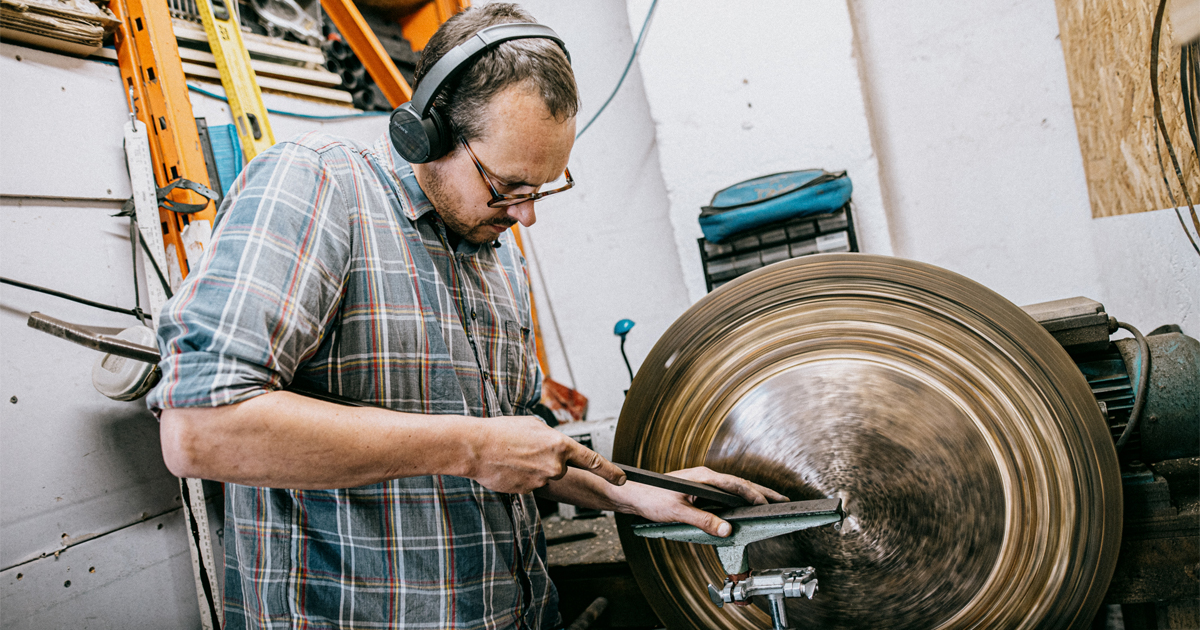
What can be changed
Almost everything, to some degree
Work ranges from small changes to a complete overhaul.
The process
A conversation, not a one-off job
I need to understand what isn’t working for you, what you hope to change, and whether my way of working suits the project.
As received
When the cymbal arrives I record an “as received” video, so we both know exactly how it sounded before any work.
Work, listen, discuss
I make a first set of changes and record another demo, so you can hear what has changed before we decide what’s next.
Refine
Most projects take several rounds. The cymbal develops through the conversation.
Finished when you’re happy
The job is done when you’re happy with it. Once payment is settled, the cymbal comes back to you.
Modification isn’t always the answer
Changing a cymbal is permanent. It can affect its resale value, and once bronze has been removed, cut or reshaped there is no going back. Sometimes it’s better to sell a cymbal that isn’t working for you and find one that does. I’m happy to talk it through.
Start a conversation
Tell me about your cymbal
What you are working with, and what you would like to change.